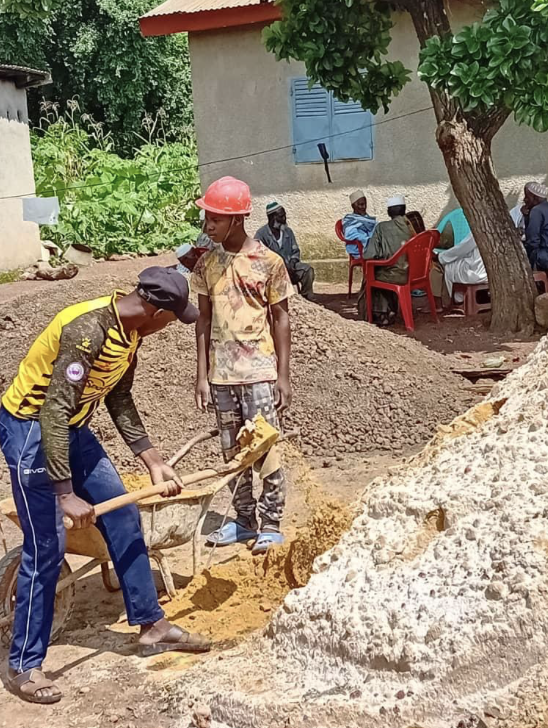
Dindeya is a historic village located in the Mamou region of Guinea, approximately 25 kilometers from Mamou, 25 kilometers from Timbo, and 5 kilometers from Ballé. The village holds an important place in Fulani history and Islamic heritage, as the mosque of Timbo was the first mosque built in the region, followed shortly thereafter by the mosque of Dindeya, reflecting Dindeya's early role in religious and community life.
Dindeya is composed of several family lineages and quarters, including Koleinkhé (Diallo), Surgayanké (Bah), Gardianké (Diallo), Ghidonyabhèïn (Sow), Seydiyanké (Barry), among others. As with many historic villages, accounts of who first settled in Dindeya may vary depending on oral tradition. What remains undisputed is the village's deep-rooted continuity and shared heritage.
Historical records and oral traceability allow us to trace Dindeya's history back to at least 1903, during the time of Almamy Ibrahima Barry, son of Karamoko Alpha. His journey passed through Timbo, Dara, Dindeya, Bantanko, and eventually Almamya Mamou, at a time when Dindeya was already inhabited and active. During periods of conflict and instability, some residents of Dindeya were forced to temporarily relocate to surrounding areas such as Soya, Noubé, Siné, Kégnèko, Soramoussaya, Soumbalako, Madina, and other neighboring localities, while maintaining strong ties to their ancestral village.
Today, Dindeya stands as a melting pot of Fulani families from diverse backgrounds, united by shared values, history, and mutual respect. The children of Dindeya now live across the world — from Guinea to the United States, Canada, Europe, and Japan — forming a global diaspora that remains deeply connected to its roots.
Founded to carry this legacy forward, the Dindeya Development & Support Org. Inc. serves as a unifying platform for the sons and daughters of Dindeya in the diaspora. The organization is committed to preserving cultural heritage, strengthening community ties, and supporting sustainable development initiatives in Dindeya and surrounding areas, ensuring that progress today honors the history and responsibilities passed down to us.